Where static procedures fit in facial paralysis treatment
Facial paralysis treatment does not always begin with an operation intended to restore a moving smile. Some people mainly need support for drooping tissues, better lip positioning, or protection of an eye that cannot close properly. Static procedures address selected problems by supporting or repositioning structures. They do not independently restore the normal nerve signal or generate an actively contracting smile muscle.
Deciding when to use a static approach requires more than counting the months since weakness began. The cause, prospect of nerve recovery, condition of the muscles, general health, and the patient’s priorities all matter. A useful decision starts by defining the problem rather than choosing the name of an operation.
When resting droop is the main concern
A supporting procedure may be considered when the mouth corner or cheek remains low at rest and the lips lack adequate support. The goal might be a more balanced resting position or easier control of drinks. These benefits differ from equal movement during smiling. A person should understand which of these goals the proposed operation is designed to address.
Saliva leakage or food collecting in the cheek may be more troublesome than appearance in photographs. Those difficulties need individual assessment because not every eating or speech problem is caused by tissue descent. The related guide to static facial suspension explains the mechanical support provided by a sling.

When native muscles cannot respond adequately to reinnervation
In some established paralysis, the original facial muscles have changed enough that repairing the nerve pathway alone is unlikely to produce useful movement. However, muscle viability is a specialist judgment. A fixed number of months or years, considered without examination and clinical history, cannot reliably determine every patient’s reconstructive options.
Dynamic reconstruction using a transferred muscle may still be possible in selected longstanding cases. Static support is one option, not necessarily the only remaining choice. The parent article on smile reanimation with gracilis muscle transfer describes a dynamic alternative. The comparison should reflect the person’s goals and suitability for each procedure.

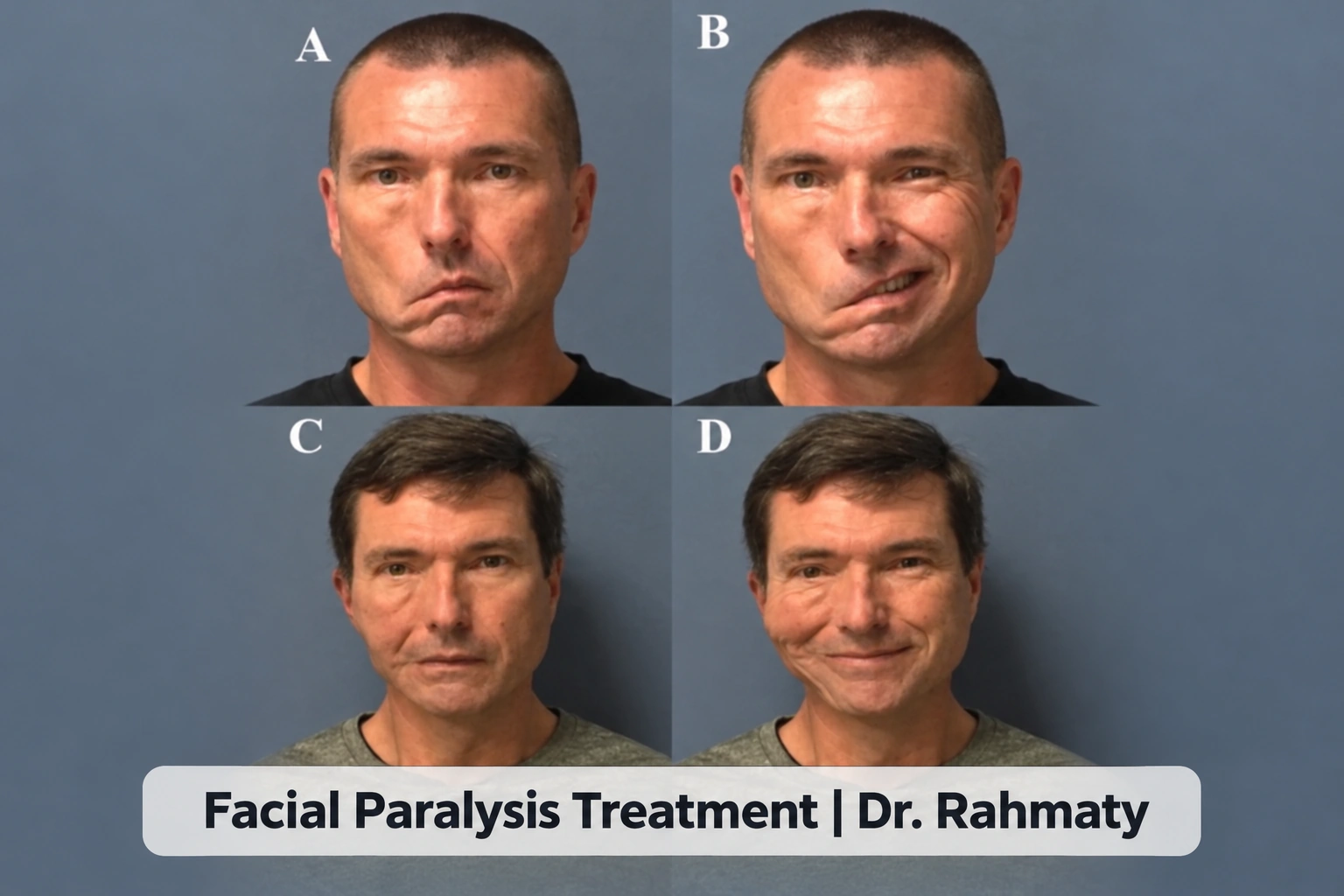
Published before-treatment and 13-month images following combined eyelid weight, lower lid tendon suspension and gracilis transfer; not static support alone or a patient of Dr Rahmati. Chung et al., 2022 — Fig. 4; CC BY 4.0.
When a longer operation does not suit the patient
Associated illness, anesthetic risk, heart or lung health, previous cancer treatment, and the ability to attend follow-up can influence treatment choices. A targeted supporting procedure may sometimes fit a person’s circumstances better than a more extensive reconstruction. Nevertheless, static does not automatically mean minor, brief, or possible without general anesthesia.
Age alone does not decide eligibility. A healthy older adult may have several options, while a younger person with significant illness may need a different balance of benefit and burden. The discussion should compare the actual operations being offered, including recovery and donor sites, rather than describing one category as universally easy or risk free.
Can support be useful while waiting for nerve recovery?
In selected circumstances, a temporary or adjustable measure may address a functional difficulty during the recovery period. This does not mean every person with recent facial weakness should undergo a sling operation. Diagnosis, timely treatment of the cause, and assessment of likely recovery come first. Any supporting intervention must be planned around the expected clinical course.
Eye protection illustrates why waiting cannot be the whole strategy. When eyelid closure is inadequate, appropriate corneal care cannot simply be postponed in the hope that nerve function returns. Eye-specific measures require their own assessment. Supporting the mouth corner does not substitute for protecting an exposed or uncomfortable eye.
When movement reconstruction leaves a support problem
Recovering movement does not necessarily correct every consequence of paralysis. After dynamic reconstruction, someone may still have resting droop, limited lip support, or an imbalance in cheek position. The surgeon can assess whether static support, tissue adjustment, or another intervention addresses the remaining difficulty.

Some treatment plans combine support and movement reconstruction from the outset. Others allow the first operation and recovery to be assessed before another procedure is considered. A residual concern is not automatically evidence that the entire earlier reconstruction failed. Identifying its actual cause is more useful than adding a further operation without a clear purpose.
When the patient prefers a different treatment burden
Personal preference is part of a sound clinical decision. After receiving an accurate explanation, a patient may prioritize resting balance and oral support over additional operations or a longer rehabilitation program. That choice should be informed by the limits of static treatment, including the fact that a supporting strip cannot by itself recreate a normal spontaneous smile.
Ask the team to explain the expected change in everyday terms. What might become easier when drinking? What difference may remain during smiling? How much follow-up is likely? These questions help compare options more realistically than a few selected before-and-after images. It is reasonable to take time to consider the answers.
When a static approach needs particular caution
Progressive weakness, unusual pain, a lump, other neurological symptoms, or an uncertain diagnosis require investigation of the underlying cause. Improving appearance must not delay that process. Sudden facial weakness with speech disturbance or limb weakness needs emergency assessment. Reconstructive planning follows appropriate attention to the immediate problem.
A tight face with unwanted associated movements is also different from a flaccid, drooping face. More tension on the tissues may not solve the problem. Assessing residual movement, muscle tightness, and the pattern of asymmetry helps avoid selecting a supporting procedure for a difficulty that needs another form of management.
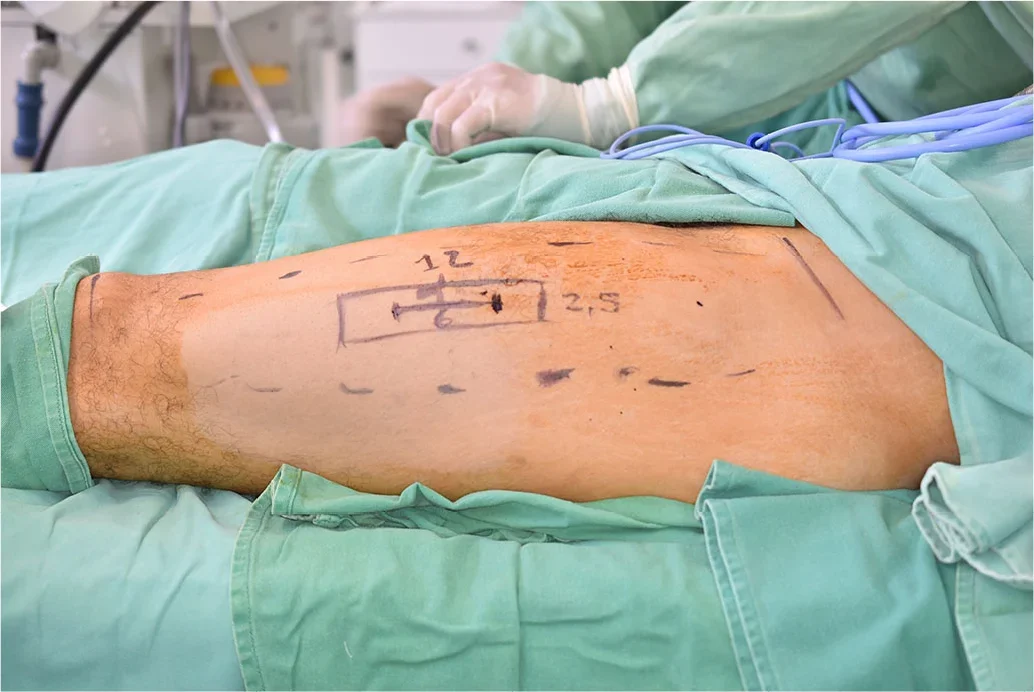
Thigh incision marking for fascia lata harvest in an orthodromic temporalis transfer study; illustrates donor site planning, not a facial surgical result or a patient of Dr Rahmati. Viterbo & Menezes Neto, 2022 — Fig. 1; CC BY 4.0.
What is checked before a final decision?
The team examines the face at rest, during speech, and while smiling, including lip function, nasal support, and eye closure. Standardized photographs and videos help establish a baseline. Testing or imaging is selected according to the cause and clinical findings, rather than used identically for everyone. Previous surgery, radiation, medicines, and wound-healing problems influence the plan.

If a fascia lata strip from the thigh is proposed, the harvest site and its risks are part of the decision. Prepared tissue or other materials bring different considerations. Ask about the intended material, possible revision, postoperative care, and how the plan relates to future reconstructive choices.
Realistic benefit and durability
Static treatment may improve resting balance or tissue support, but the extent and durability differ between patients. Tissue changes, reduced support, unsuitable tension, scarring, or wound complications may lead to adjustment or revision. Clinical studies describe potential benefit; an average result or an attractive photograph is not a personal guarantee.
Record the original goal and compare similar photographs at an appropriate stage of recovery. Understand the follow-up arrangements and symptoms that should prompt contact with the team. Success should be assessed against a meaningful functional priority, not only whether one still photograph appears symmetrical.
Choosing a role in facial paralysis treatment
A static approach is considered when support or resting position is part of the patient’s needs, either alone or alongside movement reconstruction. Tissue descent, muscle condition, overall health, and informed preferences shape that choice. Specialist assessment determines where the method fits in facial paralysis treatment and which problems require a different intervention.


