Facial paralysis causes include several different conditions, rather than a single disease. Weakness may arise from inflammation of the facial nerve, infection, an injury, a disorder affecting the brain, or a problem involving muscles and their nerve supply. Two people with a similar facial droop can therefore need very different investigations and treatment. Identifying the cause comes before choosing a reconstructive operation.
This guide explains important possibilities for patients and families. It cannot establish a diagnosis from a photograph. New facial weakness needs prompt medical assessment. Sudden drooping accompanied by speech difficulty, arm or leg weakness, visual changes or loss of balance requires emergency help immediately. Do not wait for symptoms to settle, a routine appointment or an online opinion; even short-lived symptoms can be important.
What does facial paralysis mean?
The facial nerve, also called the seventh cranial nerve, carries signals to many muscles responsible for expression. A problem along this pathway can interfere with raising an eyebrow, closing an eye, smiling or controlling the lips. Weakness may be partial or severe. The everyday term paralysis is sometimes used for both, but the degree and distribution of weakness matter clinically.
Not every weak face represents direct injury to this nerve. The brain, the junction between nerve and muscle, or the muscles themselves may be responsible. Examination of movement, sensation, hearing, balance and other neurological functions helps locate the problem. The guide to facial nerve palsy symptoms describes everyday difficulties that may accompany weakness.
Why identifying facial paralysis causes matters
Treatment for an infection differs from treatment for a stroke, an unexplained inflammatory palsy or a tumor. Some decisions depend on how recently symptoms began. Others require coordinated care between several specialists. Improving facial appearance must not delay investigation of an active disease. The initial questions are whether there is an immediate risk and what process is causing the weakness.
The pattern provides clues: sudden onset, gradual progression, repeated episodes and bilateral weakness call for different considerations. None of these patterns proves the diagnosis alone. A rapid onset does not exclude every tumor, and apparently preserved forehead movement is not a reliable home test for ruling out stroke. A complete assessment is more useful than interpreting one isolated sign.

Bell’s palsy: sudden weakness without another identified cause
Bell’s palsy is a common diagnosis in acute one-sided peripheral facial weakness. The term is used when the history and examination do not reveal another identifiable explanation. Inflammation and swelling of the nerve are thought to contribute, but a particular virus cannot be confidently blamed in every individual. Calling every facial droop Bell’s palsy can overlook conditions needing a different response.
Changes in taste, discomfort around the ear or sound sensitivity may accompany the weakness. These symptoms are not unique to Bell’s palsy. Clinical guidance emphasizes early assessment and protection of an eye that does not close properly. Medication may be appropriate early in selected patients, but self-prescribing steroids or antivirals is inappropriate, especially when infection, diabetes, pregnancy or another medical issue changes the treatment decision.
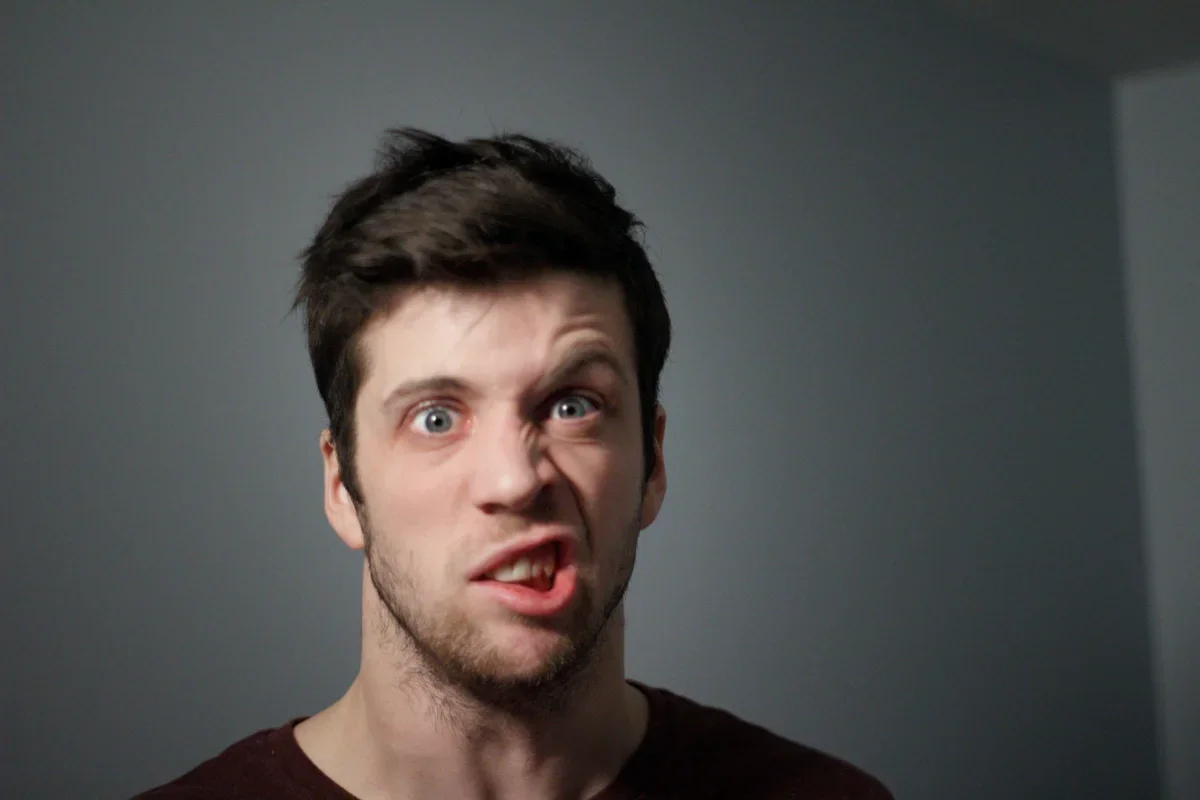
Clinical photograph labeled Bell’s palsy symptoms while showing the teeth; Benjaminginterr, CC BY-SA 4.0. Resized and converted to WebP with aspect ratio preserved. Educational example, not Dr. Rahmati’s patient or a diagnostic test. Source · CC BY-SA 4.0
Ramsay Hunt syndrome and shingles
Reactivation of varicella-zoster virus can cause facial nerve weakness associated with ear pain. In the recognized presentation of Ramsay Hunt syndrome, blisters may appear around the ear, within the ear canal or in the mouth. Hearing changes, tinnitus or dizziness can accompany the condition. Symptoms need not appear together, so an initially absent rash does not exclude every zoster-related presentation.
A patient should not wait for visible blisters before seeking care for new weakness and significant ear symptoms. Examination may include the ear, mouth, hearing and balance functions. A published photograph of an ear rash is an educational example, not a diagnostic test for another person. Treatment choices and timing should be discussed promptly with the clinician assessing the individual case.
Lyme disease and other infections
Lyme disease is relevant when geography, travel or exposure makes infection plausible. Transmitted by certain ticks, it can affect facial movement on one or both sides. A history of a tick bite, expanding rash, headache, radiating pain or meningitis-like symptoms can guide assessment. However, not remembering a bite does not by itself rule out infection.
Testing should follow an appropriate diagnostic pathway and be interpreted alongside symptoms and timing. A result on its own is not the entire diagnosis. Confirmed infection may need antibiotics; a treatment plan for unexplained Bell’s palsy should not simply be copied into every infectious case. Fever with a stiff neck or severe headache warrants urgent evaluation rather than routine observation at home.
Middle-ear infection, complications of chronic ear disease and selected other infections can also involve the facial nerve. Tell the clinician about ear discharge, pain, reduced hearing or previous ear surgery. New facial weakness in this setting is more than a cosmetic concern. The investigation and treatment depend on the suspected location and organism, rather than a standard medicine given to everyone.
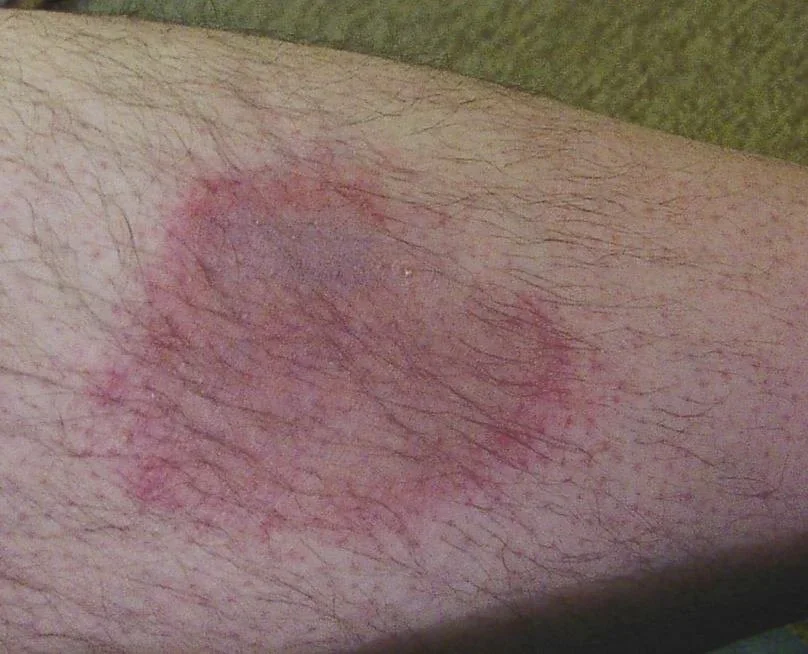
Real erythema migrans photograph on the lower leg, from a Lyme disease image collection; Jost Jahn, self-photograph, CC BY-SA 2.0 DE. Source previously adjusted brightness and contrast; converted to WebP. Shows a skin sign, not evidence of facial paralysis in this person. Source · CC BY-SA 2.0 DE
Stroke and disorders affecting the brain
A stroke can interrupt brain pathways controlling facial movement. Sudden weakness accompanied by abnormal speech, limb weakness, numbness, double vision or imbalance is an emergency. Although some central patterns differ from peripheral nerve palsy, patients should not use an eyebrow or smile test to decide that urgent help is unnecessary. Record when symptoms started and contact the local emergency service.
Other brain conditions, including some inflammatory lesions and masses, may enter the differential diagnosis. Their relevance depends on the examination, age and accompanying findings. Imaging or neurological investigations may be appropriate. Facial rehabilitation or reconstruction is considered within the wider plan, after the underlying process and immediate priorities have been addressed.
Tumors along the nerve pathway
The facial nerve travels from the brain through the temporal bone and branches within the parotid gland. Lesions involving this course, the skull base, the parotid gland or selected skin cancers may interfere with function. Progressive weakness, persistent pain, a mass, other cranial nerve findings or a history of regional skin cancer justify careful assessment. These signs do not individually prove that cancer is present.
Facial nerve schwannoma and vestibular schwannoma are among the conditions clinicians may consider. Vestibular schwannoma more often raises concern because of asymmetric hearing or balance symptoms; facial weakness is not present in every case. Diagnosis depends on appropriate examination and imaging. A reassuring earlier scan may not end the investigation when the clinical course changes or continues to be atypical.

Research from specialist referral clinics documents some tumors initially labeled Bell’s palsy. This does not mean that a tumor is likely in every person with a new droop. The practical message is to revisit an unexplained, progressive or nonrecovering presentation. Percentages from a selected reconstructive clinic should not be presented as the risk for the general population.
Inflammatory and autoimmune conditions
Sarcoidosis can affect the nervous system as well as organs such as the lungs. Facial nerve involvement may occur in a broader clinical picture that includes gland swelling, eye inflammation or other organ symptoms. Facial weakness alone cannot establish this diagnosis. Targeted investigations and specialist assessment may be needed, and treating the underlying inflammatory disease is distinct from surgically repositioning weak facial tissues.
Guillain–Barré syndrome involves immune-mediated damage to peripheral nerves. Facial weakness may occur on both sides, sometimes with limb weakness, tingling or swallowing difficulty. Progressive weakness, breathlessness or trouble swallowing needs urgent assessment. Bilateral involvement should not automatically be called two simultaneous episodes of Bell’s palsy. Monitoring general nerve function and breathing can be more important than the facial appearance itself.
Diabetes, muscle disorders and mimics
Diabetes can influence nerve health and the safety of treatment, but an elevated glucose level does not prove why a particular face became weak. Associated conditions should be managed while other plausible explanations are considered. A patient with diabetes may also need closer monitoring when medication affects blood glucose. Treatment should reflect the whole medical situation rather than one laboratory result.
Myasthenia gravis affects communication between nerves and muscles. Drooping eyelids, double vision and weakness that varies with activity and rest suggest a different mechanism from a fixed injury to one facial nerve branch. Some muscle diseases can also reduce facial movement. Recognizing these possibilities prevents a treatment designed for structural nerve injury from being proposed for a different underlying disorder.
Injury, operations and congenital weakness
Not every cause is technically a disease. Head trauma, temporal-bone fractures and injury during certain operations can affect the facial nerve. The timing of weakness in relation to the event, whether it is partial or complete, and the operative record help guide decisions. New weakness after a procedure should be reported promptly to the treating team, rather than assumed to be routine swelling.
Weakness present from birth or childhood may involve birth injury, differences in nerve development or congenital syndromes. Assessment in children includes eye protection, feeding, hearing and development. Advice for an adult with recent weakness cannot simply be transferred to an infant or someone with lifelong facial immobility. The history and expected course require an age-appropriate approach.
How clinicians investigate the cause
The history begins with the onset and speed of progression. Clinicians ask about ear pain, blisters, infection, travel, tick exposure, injury, operations, medications and previous episodes. Examination assesses facial movement at rest and during expression, eye closure, the ear and other nerve functions. A list of possible diseases should help patients prepare their history, not encourage diagnosis by matching a single symptom online.
Not everyone needs the same blood tests or an MRI. A typical uncomplicated Bell’s palsy presentation may not require extensive routine testing. Progressive, recurrent, bilateral or otherwise atypical weakness can prompt additional investigations. Infection testing, hearing assessment, imaging and electrical nerve or muscle studies should answer a specific clinical question. More tests are not automatically more informative without that question.
What useful information can patients prepare?
Write down when the face was last moving normally, which movement changed first and whether weakness progressed. Bring earlier photographs only if they help establish the baseline. Previous scan reports and the actual images may both be useful. Explain practical problems such as leaking liquids, food collecting in the cheek, dry-eye symptoms or difficulty speaking clearly; they may require separate management.
Include current medicines, relevant infections, previous cancer treatment and any ear or facial operations. Mention worsening symptoms even if an earlier diagnosis sounded reassuring. A clear follow-up plan should explain who will reassess recovery, what changes need earlier contact and how eye protection will be reviewed. This makes observation an active clinical process rather than simply waiting without guidance.
Eye protection and treatment before reconstruction
Incomplete eyelid closure can leave the cornea dry and vulnerable. The treating clinician may recommend lubrication, nighttime protection or another appropriate measure. Significant redness, pain, light sensitivity or reduced vision needs prompt assessment. Supporting the mouth or cheek does not replace corneal protection. Eye care should not be postponed until every investigation into the cause has been completed.
Management may involve medication, infection treatment, treatment of a mass, rehabilitation or planned follow-up. When weakness persists, the nerve and muscle condition, functional goals and general health help determine whether reconstruction is appropriate. The article on static versus dynamic facial reanimation explains why tissue support and active movement reconstruction address different needs.

Frequently asked questions
Is every one-sided facial droop Bell’s palsy?
No. Bell’s palsy is diagnosed from an appropriate clinical assessment when another identifiable explanation is not found. Infection, injury, stroke and nerve-pathway lesions may need consideration.
Does cold weather or stress establish the cause?
No. Symptoms occurring after cold exposure or emotional stress do not prove causation. Those circumstances should not delay assessment of new weakness.
What if recovery is not following the expected pattern?
Attend the planned review. Worsening weakness, new symptoms or an atypical course can require reassessment. Follow-up timing should be individualized rather than based on a universal deadline.
Is facial paralysis contagious?
The weakness itself is not contagious. If an infection is responsible, transmission precautions depend on the organism and should be discussed separately.
Does everyone need reconstructive surgery?
No. Many plans focus on the cause, eye protection and monitoring. Reconstruction is considered for a defined functional need after appropriate evaluation.
Conclusion
Facial weakness has many possible explanations, from self-limited conditions to diseases requiring urgent treatment. Prompt assessment, attention to accompanying symptoms and follow-up help keep care focused on the true cause. Protecting the eye and addressing active disease come before choosing an operation, and the plan should be tailored to the individual.
Medical references
- Baugh et al. — Clinical practice guideline: Bell’s palsy
- CDC — Stroke signs and symptoms
- CDC — Neurologic Lyme disease
- MedlinePlus — Facial paralysis
- NIDCD — Vestibular schwannoma
- Chung et al. — Occult tumors and facial paralysis
- MedlinePlus — Guillain–Barré syndrome
- MedlinePlus — Myasthenia gravis
- NHLBI — Sarcoidosis


