Muscle Transfer in Smile Reanimation
A smile is one of the most important facial movements. It plays a major role in emotional expression, social communication, and facial symmetry. When facial paralysis occurs because of facial nerve injury, surgery, trauma, congenital conditions, or other causes, movement at the corner of the mouth may become weak or completely absent.In these situations, advanced surgical techniques collectively known as Smile Reanimation may be considered. The goal of smile reanimation is to restore dynamic facial movement and improve symmetry during smiling.In some patients, the facial muscles are still capable of functioning, and nerve repair or nerve transfer procedures may be used to restore their activity. However, when facial paralysis has been present for a long period and the muscles responsible for smiling are no longer able to function effectively, Free Functional Muscle Transfer (FFMT) may be considered.In this procedure, a healthy and functional muscle is transferred from another part of the body to the face. Its blood vessels and nerve are then connected to suitable recipient structures. The aim is to create a new functional muscle unit capable of moving the corner of the mouth and contributing to smile restoration.
What Is Smile Reanimation?
Smile Reanimation refers to a group of surgical procedures designed to restore or improve facial movement during smiling.In patients with unilateral facial paralysis, the corner of the mouth on the affected side may not move normally when the patient attempts to smile. This can create noticeable asymmetry between the two sides of the face.The degree of asymmetry varies between patients and depends on factors such as the location and severity of nerve injury, the duration of paralysis, and the condition of the facial muscles.The goal of smile reanimation is not limited to improving facial symmetry at rest. Dynamic facial reanimation procedures aim to restore active and controllable movement during smiling.Treatment may involve nerve repair, nerve transfers, nerve grafting, tendon transfers, muscle transfers, or a combination of several techniques depending on the individual patient’s condition.

When Is Muscle Transfer Considered for Smile Reanimation?
Facial muscles require effective nerve supply to contract and move normally.When the facial nerve is damaged, communication between the brain and the muscles responsible for facial movement may become impaired or completely interrupted.If a muscle remains without effective innervation for a prolonged period, it may gradually weaken and undergo atrophy. In such situations, providing a new nerve supply alone may not always be sufficient because the original facial muscle may no longer be capable of producing useful movement.For selected patients, a healthy muscle can therefore be transferred from another part of the body to create a new functional unit in the face.Muscle transfer may be considered in certain patients with long-standing facial paralysis, severe facial nerve injuries, some congenital facial paralysis conditions, or situations in which the native facial muscles have lost adequate function.However, the duration of paralysis alone does not determine whether muscle transfer is appropriate. The condition of the nerves and muscles, the cause of paralysis, the patient’s age, previous procedures, and treatment goals should all be assessed.
What Is Free Functional Muscle Transfer?
Free Functional Muscle Transfer, or FFMT, is a surgical technique in which a functioning muscle is transferred from one part of the body to another area that requires restoration of movement.In smile reanimation surgery, a suitable muscle with the ability to contract effectively is selected and transferred along with its blood vessels and motor nerve.The transferred muscle must be positioned carefully so that future contraction can move the corner of the mouth in an appropriate direction.Because the muscle requires an adequate blood supply to survive, its blood vessels must be connected to suitable recipient vessels in the face or neck. These connections are generally performed using microsurgical techniques.The transferred muscle also needs a motor nerve source. Without effective reinnervation, the muscle will not be able to contract actively.For this reason, choosing the appropriate nerve source is an important part of planning functional muscle transfer for smile reanimation.
Gracilis Muscle Transfer for Smile Reanimation
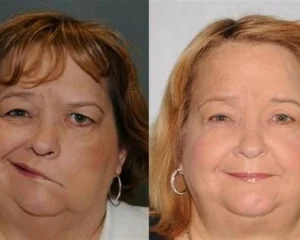
One of the best-known muscles used for Free Functional Muscle Transfer is the gracilis muscle.The gracilis is a long and relatively thin muscle located on the inner aspect of the thigh. A segment of this muscle can be harvested together with its blood vessels and motor nerve and transferred to the face.During smile reanimation, the gracilis muscle is usually positioned so that its contraction can pull the corner of the mouth upward and outward.Accurate positioning of the muscle is essential. The direction of the muscle, its attachment points, and the amount of tension placed on it can influence the final movement produced during smiling.The surgeon therefore evaluates facial anatomy and the movement of the unaffected side when determining how the transferred muscle should be positioned.
How Does the Transferred Muscle Move?
Transferring a healthy muscle to the face is only one part of the procedure. The new muscle must receive motor nerve signals in order to contract.Several nerve sources can be used to activate the transferred muscle. Two important options are the Cross-Facial Nerve Graft (CFNG) and the Masseteric Nerve.Each nerve source has different characteristics and may influence factors such as the strength of movement, the time required for reinnervation, and the potential for spontaneous smiling.In some patients, more than one nerve source may be used. This approach is known as Dual Innervation.
Role of Cross-Facial Nerve Grafting in Smile Reanimation
In a Cross-Facial Nerve Graft, nerve signals from the healthy side of the face are used to help activate the paralyzed side.A nerve graft is used to create a pathway between the functioning facial nerve on the healthy side and the affected side of the face.One of the goals of this technique is to allow the transferred muscle to receive neural input associated with natural smiling from the unaffected side.As a result, neural activity related to spontaneous smiling on the healthy side may contribute to activation of the transferred muscle on the paralyzed side.However, nerve fibers require time to grow across the graft. For this reason, some CFNG-based smile reanimation procedures are performed in more than one surgical stage.

Role of the Masseteric Nerve in Smile Reanimation
The Masseteric Nerve is another important motor nerve source used in facial reanimation.This nerve supplies the masseter muscle, which is one of the main muscles involved in chewing.During smile reanimation surgery, the masseteric nerve can be connected to the motor nerve of the transferred gracilis muscle to provide a strong source of motor input.During the early stages of recovery, some patients may initially activate the transferred muscle through jaw movement or contraction of the chewing muscles.With rehabilitation and repeated practice, the brain may gradually learn new movement patterns, allowing improved control of the transferred muscle and the corner of the mouth.
What Is Dual Innervation?
In selected facial reanimation procedures, the transferred muscle may receive nerve input from more than one source.This technique is called Dual Innervation.For example, both a Cross-Facial Nerve Graft and the Masseteric Nerve may be used to contribute to activation of the transferred muscle.The purpose of this approach is to potentially combine characteristics of different nerve sources, such as strong motor input from the masseteric nerve and neural signals associated with spontaneous smiling from the healthy side of the face.Dual innervation is not necessary or appropriate for every patient. The decision depends on facial anatomy, available nerve sources, the surgical plan, and the patient’s individual condition.
How Is Muscle Transfer for Smile Reanimation Performed?
Before surgery, facial movement is carefully evaluated.The surgeon may examine the face at rest, during smiling, while speaking, and during other facial movements. The movement of the corner of the mouth, the function of the affected muscles, and the activity of the healthy side may also be assessed.If gracilis muscle transfer is selected, an appropriate segment of the gracilis muscle is harvested from the inner thigh together with its motor nerve and blood vessels.The muscle is then transferred to the face and positioned in the desired location.Using microsurgical techniques, the blood vessels supplying the muscle are connected to recipient vessels in the face or neck to establish adequate blood flow.The motor nerve of the transferred muscle is then connected to the selected nerve source.Finally, the position, direction, and tension of the muscle are adjusted carefully so that future contraction can produce appropriate movement at the corner of the mouth.
Who May Be a Candidate for Muscle Transfer?
Muscle transfer may be considered for patients whose native facial muscles are no longer capable of producing adequate movement.This may occur in certain cases of long-standing facial paralysis or after severe injury to the facial nerve.Functional muscle transfer may also be considered in selected patients after surgery involving the face or skull base, as well as in certain congenital facial paralysis conditions.However, having facial paralysis does not automatically mean that muscle transfer is the most appropriate treatment.The cause and duration of paralysis, the condition of the facial muscles, available nerve sources, the patient’s age, previous treatment, and individual goals all need to be evaluated.
What Is the Difference Between Nerve Transfer and Muscle Transfer?
Nerve transfer and muscle transfer are different but closely related concepts in facial reanimation surgery.In a nerve transfer, the goal is to provide a new source of motor nerve input to facial muscles that are still capable of responding and contracting.In a muscle transfer, a new functional muscle unit is introduced into the face.Muscle transfer becomes particularly important when the original muscles responsible for smiling have lost their functional capacity and are unlikely to respond adequately even if a new nerve supply is provided.However, the transferred muscle itself still requires nerve input. Therefore, muscle transfer is frequently combined with nerve transfer or nerve grafting techniques.
What Results Can Be Expected After Muscle Transfer?
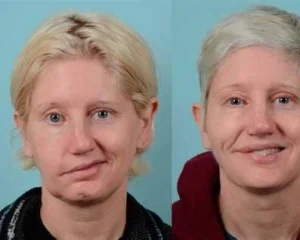
The main goal of surgery is to create or improve movement at the corner of the mouth and increase facial symmetry during smiling.Results vary from one patient to another.The cause and duration of facial paralysis, the condition of the nerves, the selected motor nerve source, the surgical technique, muscle positioning, and the rehabilitation process can all affect the final outcome.For some patients, the primary goal may be to obtain strong and controllable movement. In others, improving coordination and achieving a more spontaneous smile may be particularly important.For this reason, the expected outcome should be discussed individually for each patient rather than assuming that all patients will experience the same result.
When Does the Transferred Muscle Begin to Move?
The transferred muscle does not begin functioning normally immediately after surgery.After the nerve connection has been made, nerve fibers need time to grow and establish effective communication with the transferred muscle.For this reason, movement generally appears gradually and may take several months to develop.The exact timing depends on factors such as the nerve source used, the distance required for nerve regeneration, the surgical technique, and individual patient characteristics.Once the first signs of muscle contraction appear, another important phase of treatment begins: movement training and rehabilitation.

Rehabilitation After Smile Reanimation Surgery
Rehabilitation is an important part of Smile Reanimation.Once the transferred muscle begins receiving nerve signals, the patient needs to learn how to activate and control the new movement.Rehabilitation may include exercises designed to improve movement of the corner of the mouth, facial symmetry, control of muscle contraction, and coordination during smiling.The rehabilitation program may differ depending on the nerve source used.For example, when the masseteric nerve is used, the patient may initially learn to activate the transferred muscle together with jaw movement.Through repetition and training, the brain may develop new motor patterns that improve control of the reconstructed smile.
Is Smile Reanimation Performed in One Stage or Multiple Stages?
Not all smile reanimation procedures are performed in the same way.In some techniques, muscle transfer and nerve connection can be performed during a single operation.In other techniques, a nerve pathway is created first. Time is then allowed for nerve regeneration before the functional muscle transfer is performed in a later procedure.This staged approach may be used in certain reconstruction strategies involving a Cross-Facial Nerve Graft.The choice between a single-stage and staged procedure depends on the patient’s condition, the nerve source, the selected surgical technique, and the overall reconstructive plan.
Possible Complications of Functional Muscle Transfer
Free Functional Muscle Transfer is a specialized surgical procedure and, like any operation, can be associated with potential risks and complications.Possible complications may involve the surgical wound, the thigh donor site, the nerves, blood vessels, or the amount and direction of movement achieved after surgery.In some patients, the resulting movement may be less or greater than expected. Additional procedures may occasionally be considered to improve symmetry or adjust the direction of movement.Because the survival of the transferred muscle depends on adequate blood flow, careful postoperative monitoring is important.
The type and likelihood of complications vary from patient to patient and should be discussed individually before surgery.
Is Smile Reanimation Suitable for Every Patient With Facial Paralysis?
No. Facial paralysis varies considerably between patients.Some patients still have facial muscles capable of functioning, making nerve repair or nerve transfer techniques potentially more appropriate.In other patients, static procedures may be considered to improve facial symmetry at rest.When the muscles responsible for smiling have significantly lost their functional ability, muscle transfer may be considered as one of the options for dynamic facial reanimation.For this reason, treatment selection should be based on a detailed evaluation of the individual patient rather than a single approach being used for all cases.
What Is the Main Goal of Smile Reanimation?
The goal of smile reanimation is not simply to move the corner of the mouth.Successful reconstruction aims to create movement that is appropriate in direction, strength, and coordination and, when possible, closer to natural facial movement.Important goals include improving facial symmetry at rest and during smiling, restoring active movement on the paralyzed side, and improving the patient’s ability to express emotion through facial movement.Free Functional Muscle Transfer using the gracilis muscle is an important option for dynamic facial reanimation when the native facial muscles are no longer capable of producing adequate movement.
Conclusion
Smile Reanimation includes specialized surgical techniques designed to restore facial movement in patients with facial paralysis.When the muscles responsible for smiling have lost their functional capacity because of long-standing paralysis or severe nerve injury, Free Functional Muscle Transfer may be considered as a reconstructive option.One of the most commonly used techniques is Gracilis Muscle Transfer, in which a segment of the gracilis muscle from the inner thigh is transferred to the face together with its blood vessels and motor nerve.Different nerve sources can be used to activate the transferred muscle, including the Cross-Facial Nerve Graft and Masseteric Nerve. In selected cases, dual innervation may also be considered.The most appropriate technique depends on the cause and duration of facial paralysis, the condition of the facial nerves and muscles, previous procedures, and the patient’s reconstructive goals. Therefore, smile reanimation should be planned individually after a detailed clinical evaluation.