
Does a Neck Lift Hurt? Real Patient Experiences, Pain Level, and Neck Lift Side Effects
A neck lift is one of the most effective solutions for sagging skin, looseness, double chin, and visible neck aging. After forty, many people notice faster aging in the neck than the face. These changes raise common concerns about neck lift pain and laser neck lift pain before choosing treatment. For this reason, many individuals explore options ranging from HIFU and threads to laser and surgical neck lift procedures. Questions like “Does a neck lift hurt?” and “How intense are the side effects?” almost always come up.
This article serves as a complete introductory guide to these concerns. It reviews neck lift pain, neck lift side effects, and recovery across different techniques. Real patient experiences help clarify expectations and support informed decision-making.

Why Neck Lift Pain Matters to Patients
Pain is one of the main concerns before any cosmetic procedure. Many patients express fear of unbearable pain. Others worry about choosing the least painful method. Some ask if they can return to work quickly. Many want to know how long neck lift pain lasts. Others ask whether pain signals complications or normal healing.
These concerns are understandable because the neck is a sensitive area. It contains delicate skin, muscles, and nerves. The good news is that most neck lift methods do not cause severe pain. In many non-surgical treatments, patients feel only tingling or mild tightness.
Below, each neck lift method appears with a clear pain explanation.
Thread Neck Lift Pain (PDO, COG)
Thread lifting is a popular method for mild to moderate neck sagging. Most patients describe the pain as present but tolerable. Doctors usually classify the pain as mild to moderate.
Pain occurs because the cannula or needle enters the skin. Threads settle inside the tissue. Skin lifting creates tension. Mild inflammation appears during the first days.

Patients often share similar experiences. Some feel slight pain during anesthesia injection. Others feel soreness for several days. Many notice tightness lasting up to one week.
Pain usually lasts two to seven days. Rare cases report discomfort lasting up to ten days.
Cold compresses during the first day help significantly. Avoiding strong facial movements reduces tension. Sleeping on the back improves comfort. Prescribed painkillers help control discomfort. Avoiding massage or frequent touching prevents irritation.
Most patients later report less pain than expected.
HIFU Neck Lift Pain
HIFU is a non-invasive neck lift method. Doctors perform it without needles, cuts, or surgery. Most patients feel mild tingling, warmth, or deep pressure.
Overall, HIFU neck lift pain remains mild. Many patients tolerate the procedure without anesthesia.
Patients describe sensations similar to vibration or tingling. Some feel more discomfort near bony areas. Certain shots cause brief stinging but remain tolerable.
Pain usually appears during treatment only. Mild sensitivity or tightness may remain afterward. This sensation usually resolves within twenty-four hours.
Slim patients with low fat feel stronger sensations. Thin skin increases sensitivity. Low pain tolerance also affects discomfort perception.

Laser Neck Lift Pain (CO2, Nd:YAG)
Laser neck lift includes superficial skin tightening lasers and invasive CO2 laser rejuvenation.
Mild lasers cause very little pain. Strong CO2 lasers cause moderate pain. Doctors control this pain effectively with anesthesia.
Patients often report intense heat sensation. Others describe burning afterward. Many compare it to temporary sunburn.
Pain duration depends on laser intensity. Mild lasers cause discomfort for twelve to twenty-four hours. CO2 laser causes burning and sensitivity for two to five days.
RF Neck Lift Pain
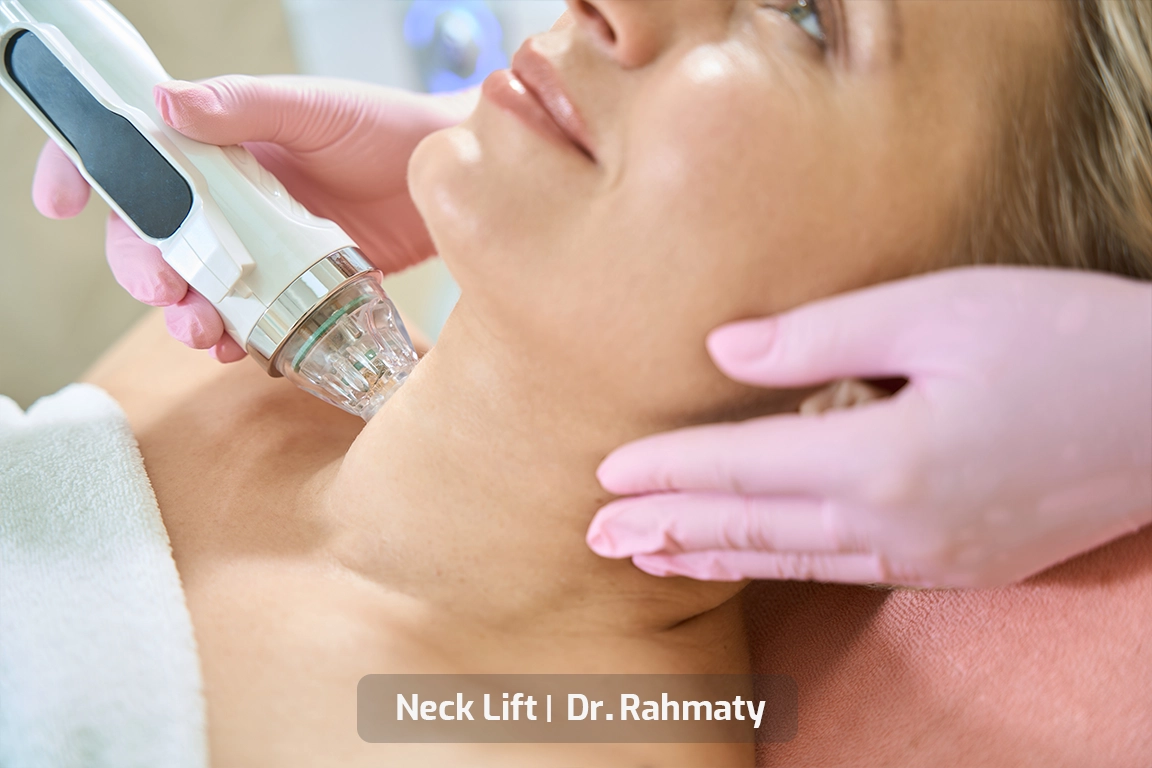
Radiofrequency is a non-surgical method for tightening neck skin. Most patients feel only deep warmth.
Many describe the sensation as a warm massage. Some feel brief heat in certain areas. Patients rarely describe RF as painful.
Pain usually appears only during the session. It disappears immediately after treatment.
Pain from Fat Injection and Fillers in the Neck
Fat injection and fillers do not create a true neck lift. Doctors use them for neck rejuvenation.
Fillers cause mild to moderate pain from needle entry. Fat injection causes moderate pain due to fat harvesting.
Patients describe needle-like sensations during fillers. Fat injection causes soreness at the donor area.
Filler pain lasts one to two days. Fat injection pain lasts three to seven days.
Pain of Surgical Neck Lift
Surgical neck lift provides the longest-lasting and strongest results. Many patients fear severe pain.
In reality, surgical neck lift pain feels much less than expected. Surgeons perform the procedure under anesthesia. Doctors prescribe effective pain medications.
Most patients describe pressure and tightness instead of sharp pain. Many compare it to mild stitch discomfort.
Pain usually lasts two to five days. Pain decreases significantly after one week. Muscle tightness may persist for two to three weeks.
Pain sources include platysma tightening, swelling, drains in some cases, and small incisions behind the ears or under the chin.
Pain with fever, discharge, odor, severe one-sided pain, or sudden swelling requires immediate medical attention.
Comparison of Pain Levels in Lift Methods
PDO threads cause mild to moderate pain lasting two to seven days with tightness and inflammation.
HIFU causes mild pain during treatment with tingling sensation.
Mild laser causes very little pain for one day with warmth.
CO2 treatment leads to laser neck lift pain that feels moderate, with burning sensitivity lasting about two to five days.RF causes very mild pain only during treatment with gentle heat.
Fillers cause low pain for one to two days with needle sensation.
Fat injection causes moderate pain for three to seven days due to harvesting.
Surgical neck lift causes manageable moderate pain for three to five days with muscle tension.
Factors That Increase Pain
Greater sagging requires more correction and increases pain. Surgeon skill plays the biggest role in pain severity and side effects. Thin or low-collagen skin feels more sensitive. Poor aftercare increases discomfort. Stress and anxiety lower pain tolerance.

Is Neck Lift Pain Normal or a Sign of Complications?
Mild pain is normal after most neck lift methods. Severe pain with redness, discharge, fever, firm swelling, deep bruising, prolonged numbness, or one-sided pain requires evaluation. These signs may indicate infection, nerve injury, or hematoma.
How to Control Neck Lift Pain
Anti-inflammatory medications like ibuprofen and acetaminophen help control pain. Cold compresses work well after threads, lasers, and injections. Limiting neck movement reduces discomfort. Avoid sleeping on the stomach. Sleeping elevated on the back improves swelling. Drinking enough water speeds inflammation reduction. Avoid salty foods to reduce swelling.
Neck Lift Methods with the Least Pain
For minimal pain, HIFU, RF, and mild lasers work best. Threads and fillers cause moderate discomfort. Surgical neck lift causes more pain but offers the longest-lasting results.

Final Patient Experience Summary
Most patients rate neck lift pain between two and four out of ten. Surgery hurts less than expected because medications control pain. Non-surgical methods cause minimal discomfort. Pain usually decreases within days and becomes mild tightness.
Professional Consultation
If neck lift pain, side effects, or method selection concerns you, consult an experienced specialist.
Dr. Benjamin Rahmati is a cosmetic surgeon specializing in face and neck lifting. He has extensive experience in submental techniques, platysma tightening, and double chin correction. He can recommend the best option based on your condition.