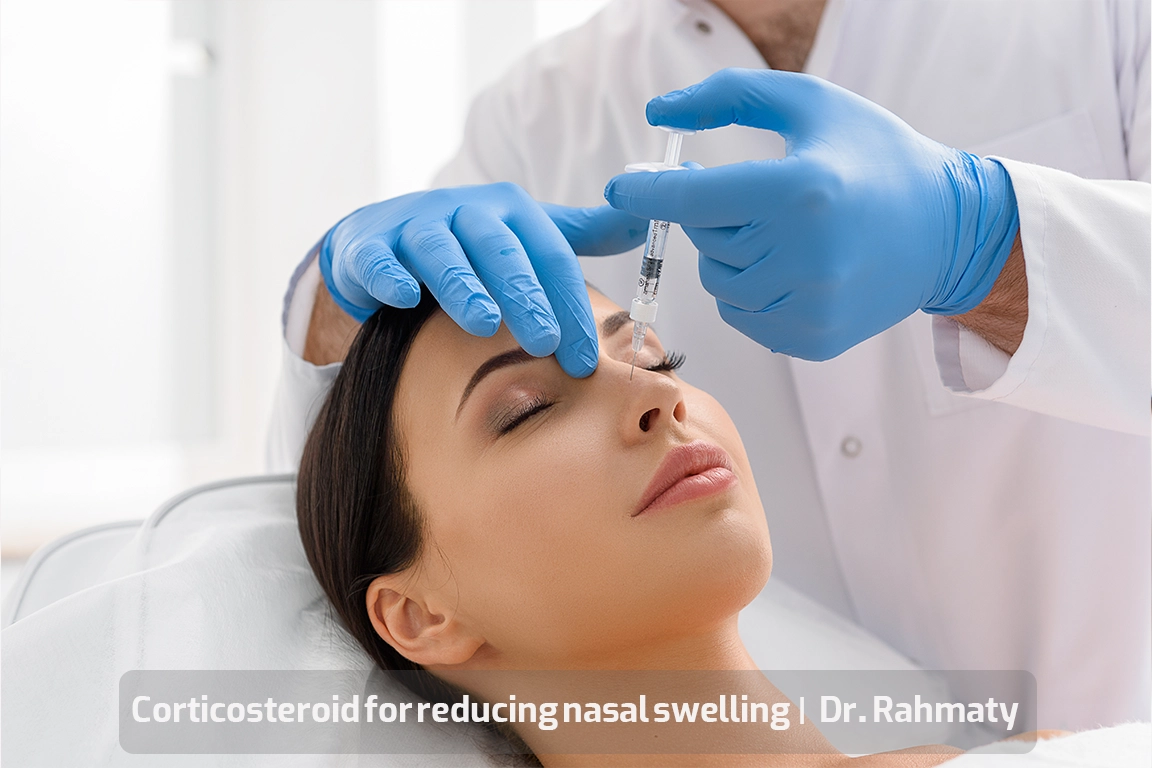
Corticosteroids for Reducing Nasal Swelling
Rhinoplasty remains one of the most popular cosmetic procedures today. Corticosteroids for Reducing Nasal Swelling have become a crucial part of the process, as post-operative swelling – while natural – often makes the nose appear temporarily larger than desired. These anti-inflammatory injections (commonly called “cortisone”) effectively minimize puffiness and help reveal your final results sooner. If you’re considering rhinoplasty or are recovering from surgery, understanding this swelling management technique is essential.

Why Are Corticosteroid Injections Used?
As mentioned earlier, corticosteroids can be used by doctors to improve the condition and reduce nasal swelling. Cortisone is a type of fat that is naturally produced in the liver with the help of cholesterol. The adrenal gland uses it to produce hormones. Cortisone plays a role in suppressing inflammation in various tissues of the body and relieving swelling. However, it’s important to note that cortisone can weaken the immune system.

Swelling resulting from rhinoplasty can be reduced through cortisone injections. These injections are generally administered in noses with thick, fleshy skin, and that remain so even after surgery. It’s important to point out that cortisone injections are not recommended for noses with bony structures, as they can destroy the underlying subcutaneous tissue.
Who Can Receive Corticosteroid Injections?
Corticosteroid injections to reduce nasal swelling are not suitable for everyone. Only those who meet specific conditions are eligible for this treatment. Some of the criteria that permit cortisone injection include:
-
Thick nasal skin, particularly at the tip
-
Slow reduction of swelling and inflammation after surgery
-
History of previous rhinoplasty and revision surgery

Despite these factors, it’s crucial to emphasize that cortisone injections must be performed by an experienced and specialized physician. When done correctly, these injections can significantly reduce swelling and inflammation. Scar tissue, which forms after surgery and causes inflammation, must be eliminated to reduce nasal swelling. A properly administered cortisone injection can break down this scar tissue and alleviate the swelling.
It is recommended that cortisone injections be administered by an ENT (ear, nose, and throat) specialist.

Frequency and Dosage of Cortisone Injections (Corticosteroids for Reducing Nasal Swelling)
The patient’s condition, nose type, and nasal structure are the three main factors that determine the frequency and dosage of cortisone injections. The ENT specialist will decide how much and how often cortisone should be injected. Some individuals may require several units, while others might need only one injection.
Side Effects of Cortisone Injections
While cortisone helps reduce inflammation and is even used in some anti-allergy medications, its weakening effect on the body cannot be overlooked. Possible side effects of cortisone injections include:
-
Calcium deposits in bones and inhibited bone formation
-
Weakened immune system, increasing vulnerability to infections
-
Reduced calcium absorption in the body
-
Increased risk of vision problems such as cataracts or blurred vision
-
Increased appetite
-
Muscle atrophy due to repeated cortisone use
It is also worth noting that wearing nasal tape is recommended one to two weeks after cortisone injections. In any case, consulting your surgeon before making any decisions during the recovery period is essential.

Additionally, Dr. Benyamin Rahmati, a renowned ENT specialist and head and neck surgeon, offers various therapeutic and cosmetic procedures in the city of Arak, using the latest global technologies and methods. We also recommend reading the article on Natural Rhinoplasty Using the Preservation Technique for more information.