Direct Facial Nerve Repair (Facial Nerve Repair)
Facial nerve injury is one of the leading causes of facial paralysis and can significantly affect a person’s ability to smile, close the eye, speak, and eat. In patients with a complete or partial transection of the facial nerve, Direct Facial Nerve Repair is often considered the preferred treatment whenever feasible. By reconnecting the two ends of the injured nerve, this procedure restores the natural pathway for nerve signal transmission and, when performed promptly, can significantly improve the chances of recovering facial muscle function.
The decision to perform Direct Facial Nerve Repair depends on several factors, including the type of injury, the location of the damage, the distance between the nerve ends, and the time elapsed since the injury. The sooner the repair is performed, the greater the likelihood of successful nerve regeneration and facial movement recovery. In this article, you will learn about Facial Nerve Repair, its indications, surgical technique, benefits, limitations, expected outcomes, and postoperative care.

What Is Direct Facial Nerve Repair?
Direct Facial Nerve Repair is one of the primary techniques used to reconstruct the facial nerve. During this procedure, the surgeon reconnects the two ends of the injured nerve without placing them under tension. The repair is performed under an operating microscope using extremely fine microsutures to preserve the nerve’s natural pathway.
Unlike nerve grafting, Facial Nerve Repair does not require harvesting a nerve from another part of the body. For this reason, whenever the patient’s condition allows, it is usually considered the first surgical option. The main goal is to create the optimal environment for regenerating nerve fibers and restoring facial muscle function over time.
When Is Direct Facial Nerve Repair Possible?
This procedure is not suitable for every patient. The most important requirement for Direct Facial Nerve Repair is that the two ends of the injured nerve can be approximated without excessive tension.
This situation is commonly seen after clean lacerations, certain ear surgeries, parotid gland procedures, or injuries diagnosed immediately after they occur. If the gap between the nerve ends is too large, direct repair may place excessive tension on the repair site and reduce the likelihood of successful healing. In such cases, nerve grafting or other facial reanimation techniques are usually recommended.
Timing also plays a critical role. The shorter the interval between injury and surgery, the greater the chance of preserving healthy facial muscles and restoring normal facial movement.
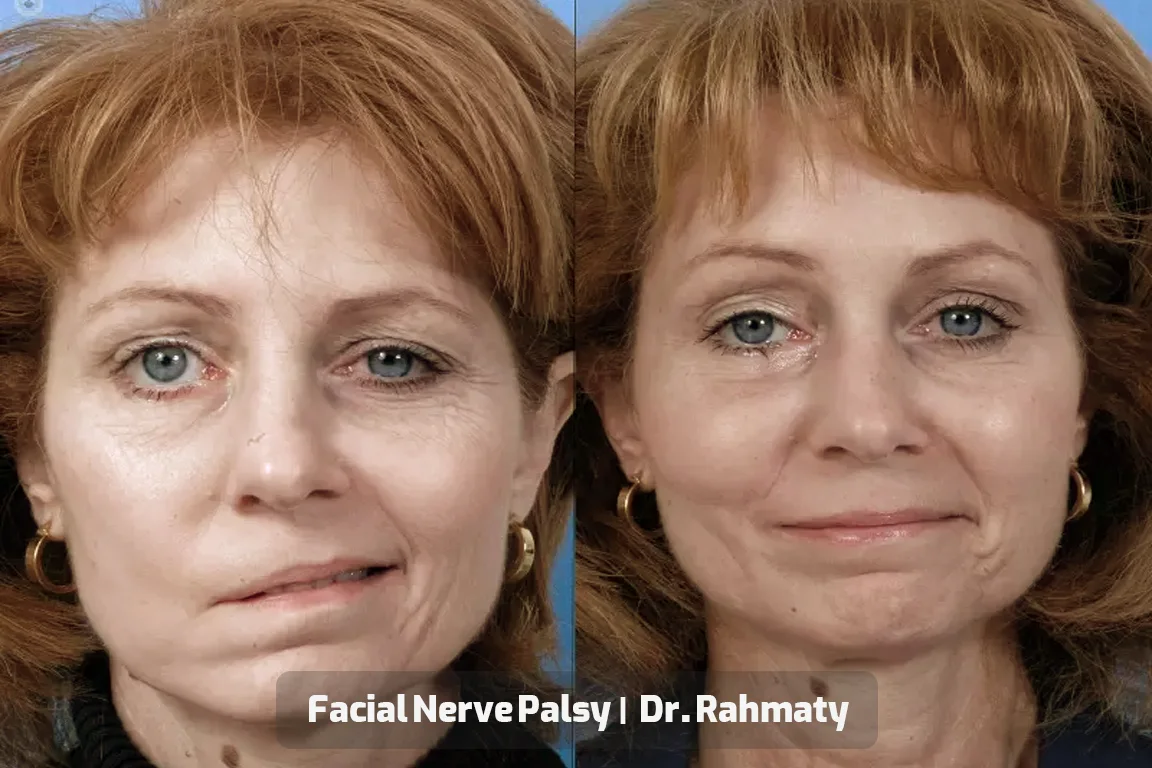
How Is Facial Nerve Repair Performed?
The procedure is performed under general anesthesia using an operating microscope to visualize the delicate nerve fibers. The surgeon first identifies the injured segment and carefully exposes the healthy ends of the nerve. Damaged tissue is removed to create clean nerve edges suitable for repair.
Next, the two nerve ends are precisely aligned and connected with microsurgical sutures. In selected cases, biological adhesives or nerve conduits may also be used to support the repair. Before completing the procedure, the surgeon ensures that no tension or compression is present at the repair site, as excessive pressure can interfere with nerve regeneration.
Advantages of Direct Facial Nerve Repair
One of the greatest advantages of Direct Facial Nerve Repair is that it preserves the natural pathway of nerve signal transmission. Since no graft is placed between the nerve ends, regenerating nerve fibers can follow their original anatomical course. Another important benefit is that there is no need to harvest a donor nerve from the leg or another part of the body. This eliminates an additional surgical site and reduces donor-site morbidity.
When surgery is performed under appropriate conditions and without delay, patients generally have a higher chance of recovering voluntary facial movement compared with procedures requiring nerve grafts. However, the final outcome still depends on the severity of the injury, muscle health, and the body’s healing process.

Factors That Influence the Success of Facial Nerve Repair
The success of Facial Nerve Repair depends on much more than the surgical procedure itself.
One of the most important factors is the timing of surgery. Early repair allows facial muscles to remain responsive to nerve signals, increasing the likelihood of functional recovery.
The type of injury is another key factor. Clean nerve transections generally produce better outcomes than crush injuries or extensive tissue damage.
Patient age, overall health, medical conditions such as diabetes, smoking, and tissue blood supply can also affect nerve regeneration.
Equally important is the surgeon’s experience. Successful microsurgical nerve repair requires advanced technical skills and careful patient selection.
Recovery After Direct Facial Nerve Repair
Patients should understand that recovery does not occur immediately after surgery. Even when the repair is technically successful, regenerating nerve fibers require time to grow from the repair site toward the facial muscles.
Nerve regeneration generally occurs at an average rate of approximately one millimeter per day. Depending on the location of the injury, the first signs of movement may not appear for several months. In many patients, the final outcome is evaluated between twelve and eighteen months after surgery. During this period, patience and regular follow-up are essential, and the absence of early movement should not be interpreted as treatment failure.

Postoperative Care
Proper postoperative care plays a vital role in the success of Direct Facial Nerve Repair.
During the first few weeks, patients should avoid heavy physical activity and protect the surgical site from unnecessary pressure. Medications should be taken exactly as prescribed, and scheduled follow-up visits should not be missed.
If complete eyelid closure is not possible, protecting the cornea with artificial tears, lubricating eye ointments, or protective eye coverings is essential.
Once the initial healing phase has passed, facial rehabilitation begins. Specialized facial exercises, massage therapy, neuromuscular retraining, and, in selected patients, biofeedback therapy can improve muscle coordination and optimize functional recovery.
Limitations of Direct Facial Nerve Repair
Despite its many advantages, Direct Facial Nerve Repair is not appropriate for every patient. When the gap between the nerve ends is too large or a tension-free repair cannot be achieved, this technique is generally not recommended.
Likewise, patients with long-standing facial paralysis and severe muscle atrophy may not regain meaningful facial movement even after successful nerve repair.
In these situations, nerve grafting, nerve transfer, or free functional muscle transfer may provide better outcomes. Selecting the appropriate treatment requires careful evaluation of both the facial nerve and facial muscles.
Conclusion
Direct Facial Nerve Repair is one of the most effective treatments for acute facial nerve injuries. When the appropriate conditions exist, it offers the best opportunity to restore natural facial muscle function by preserving the normal pathway of nerve regeneration.
Early diagnosis, timely surgery, healthy facial muscles, and a structured rehabilitation program are all critical factors influencing the final outcome.

If you or a loved one has experienced facial nerve injury or facial paralysis, early evaluation by an experienced facial nerve surgeon is essential. Dr. Benyamin Rahmaty, an ENT specialist and Facial Plastic Surgeon, specializes in facial paralysis treatment and facial nerve reconstruction. After carefully evaluating each patient, he recommends the most appropriate treatment—including Direct Facial Nerve Repair, nerve grafting, or other facial reanimation procedures—to achieve the best possible functional and aesthetic results.